Alternative world
Since the 1990s, the application of the steampunk label has expanded beyond works set in recognizable historical periods, to works set in fantasy worlds that rely heavily on steam- or spring-powered technology.Fantasy steampunk settings abound in tabletop and computer role-playing games. Notable examples include Myst, Skies of Arcadia, Final Fantasy VI, Final Fantasy VII, Final Fantasy IX, Rise of Nations: Rise of Legends, and Arcanum: Of Steamworks and Magick Obscura.
The gnomes and goblins in World of Warcraft also have technological societies that could be described as steampunk as they are vastly ahead of the technologies of men, but are not magical like those of the Elves.
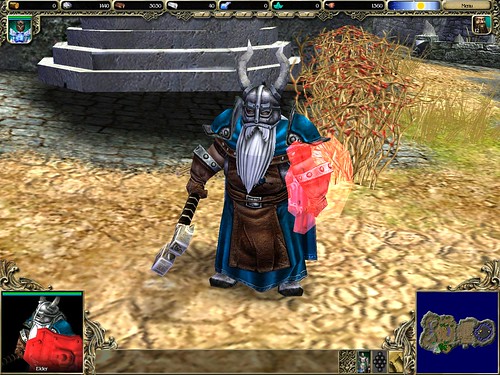 Similarly in the role-playing game series The Elder Scrolls
a race of Dwarves, the "Dwemer", are shown to utilise technology which
is heavily influenced by steampunk, featuring giant cogs and visible
moving parts, as well as steam power, as opposed to the more
medieval-based technologies of the species of men, and the magic-based
society of the Elven races.
Similarly in the role-playing game series The Elder Scrolls
a race of Dwarves, the "Dwemer", are shown to utilise technology which
is heavily influenced by steampunk, featuring giant cogs and visible
moving parts, as well as steam power, as opposed to the more
medieval-based technologies of the species of men, and the magic-based
society of the Elven races.Dungeons and Dragons introduced steampunk elements with the Eberron setting, including automatons called warforged and the use of "technological" magic through items such as the lightning rail and airships.
Amidst the historical and fantasy sub-genres of steampunk is a type which takes place in a hypothetical future or a fantasy equivalent of our future, involving the domination of steampunk-style technology and aesthetics. Examples include Jean-Pierre Jeunet & Marc Caro's The City of Lost Children (1995), anime film Steamboy (2004), Turn A Gundam (1999–2000), Trigun,and Hayao Miyazaki's post-apocalyptic anime Future Boy Conan (1978), and Disney's film Treasure Planet (2002). In 2011, musician Thomas Dolby heralded his return to music after a 20 year hiatus with an online steampunk alternate fantasy world called the Floating City, to promote his album, A Map of the Floating City
Fantasy and horror
 Kaja Foglio introduced the term "Gaslight Romance", gaslamp fantasy, which John Clute and John Grant
define as "steampunk stories ... most commonly set in a romanticized,
smoky, 19th-century London, as are Gaslight Romances. But the latter
category focuses nostalgically on icons from the late years of that
century and the early years of the 20th century--on Dracula, Jekyll and
Hyde, Jack the Ripper, Sherlock Holmes and even Tarzan--and can normally
be understood as combining supernatural fiction and recursive fantasy, though some gaslight romances can be read as fantasies of history." Some, such as author/artist James Richardson-Brown use the term steamgoth to refer to steampunk expressions of fantasy and horror with a "darker" bent.
Kaja Foglio introduced the term "Gaslight Romance", gaslamp fantasy, which John Clute and John Grant
define as "steampunk stories ... most commonly set in a romanticized,
smoky, 19th-century London, as are Gaslight Romances. But the latter
category focuses nostalgically on icons from the late years of that
century and the early years of the 20th century--on Dracula, Jekyll and
Hyde, Jack the Ripper, Sherlock Holmes and even Tarzan--and can normally
be understood as combining supernatural fiction and recursive fantasy, though some gaslight romances can be read as fantasies of history." Some, such as author/artist James Richardson-Brown use the term steamgoth to refer to steampunk expressions of fantasy and horror with a "darker" bent.
Комментариев нет:
Отправить комментарий